
EndoGusto lets you build strength workouts directly from your coaching calendar. You can browse a full Exercise Library, filter by muscle group or equipment, and add exercises that include animated GIFs showing proper form. Your athletes see exactly how to perform each movement inside their workout, on desktop and mobile.
This guide walks you through creating a strength workout from start to finish.
Create a New Strength Workout
Step 1: Open the Workout Builder
Open EndoGusto and go to Calendar. You have two ways to start a new strength workout:
- Click on the day you want to schedule the workout, then select the strength workout option.
- Drag and drop the strength workout icon onto the desired day on the calendar.
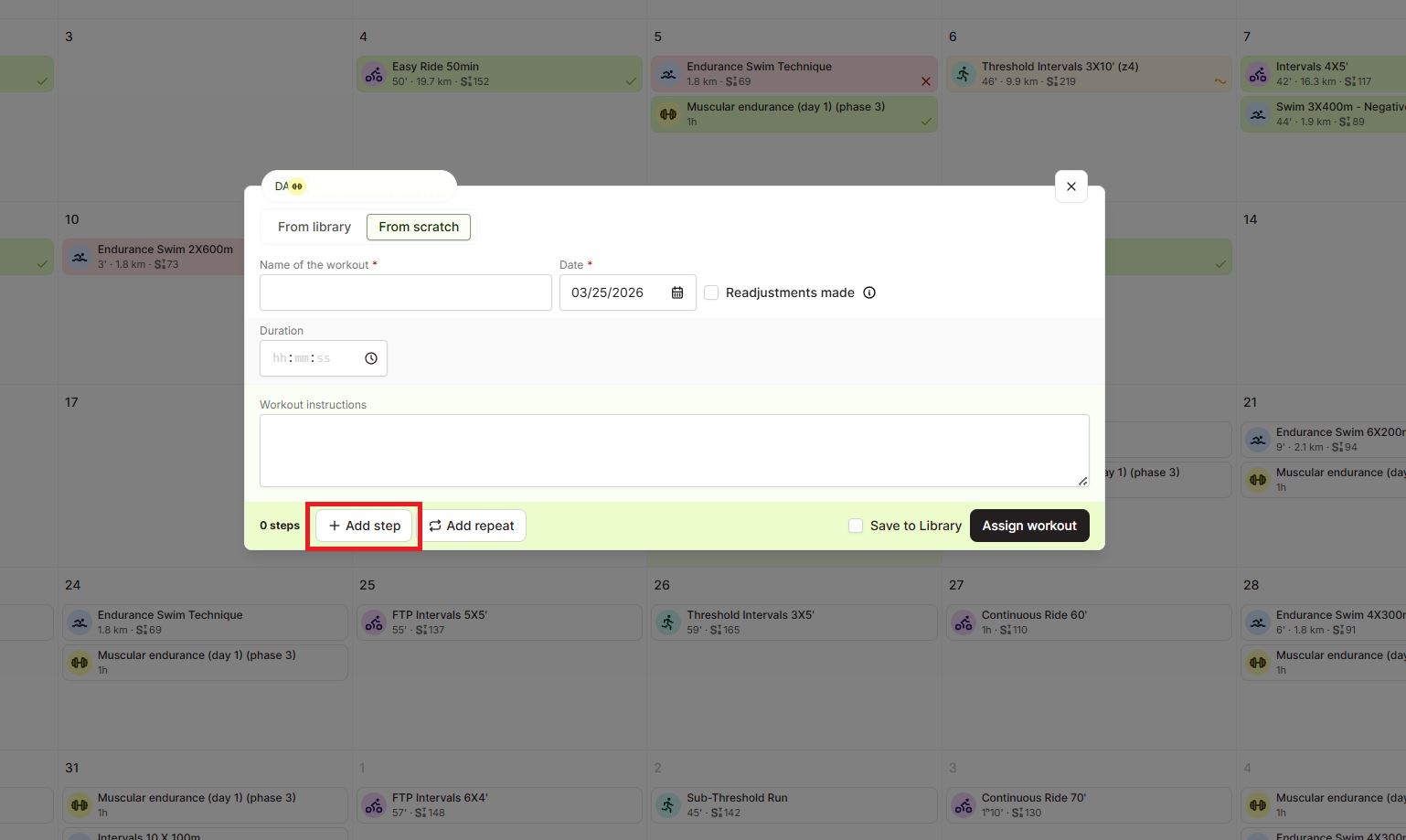
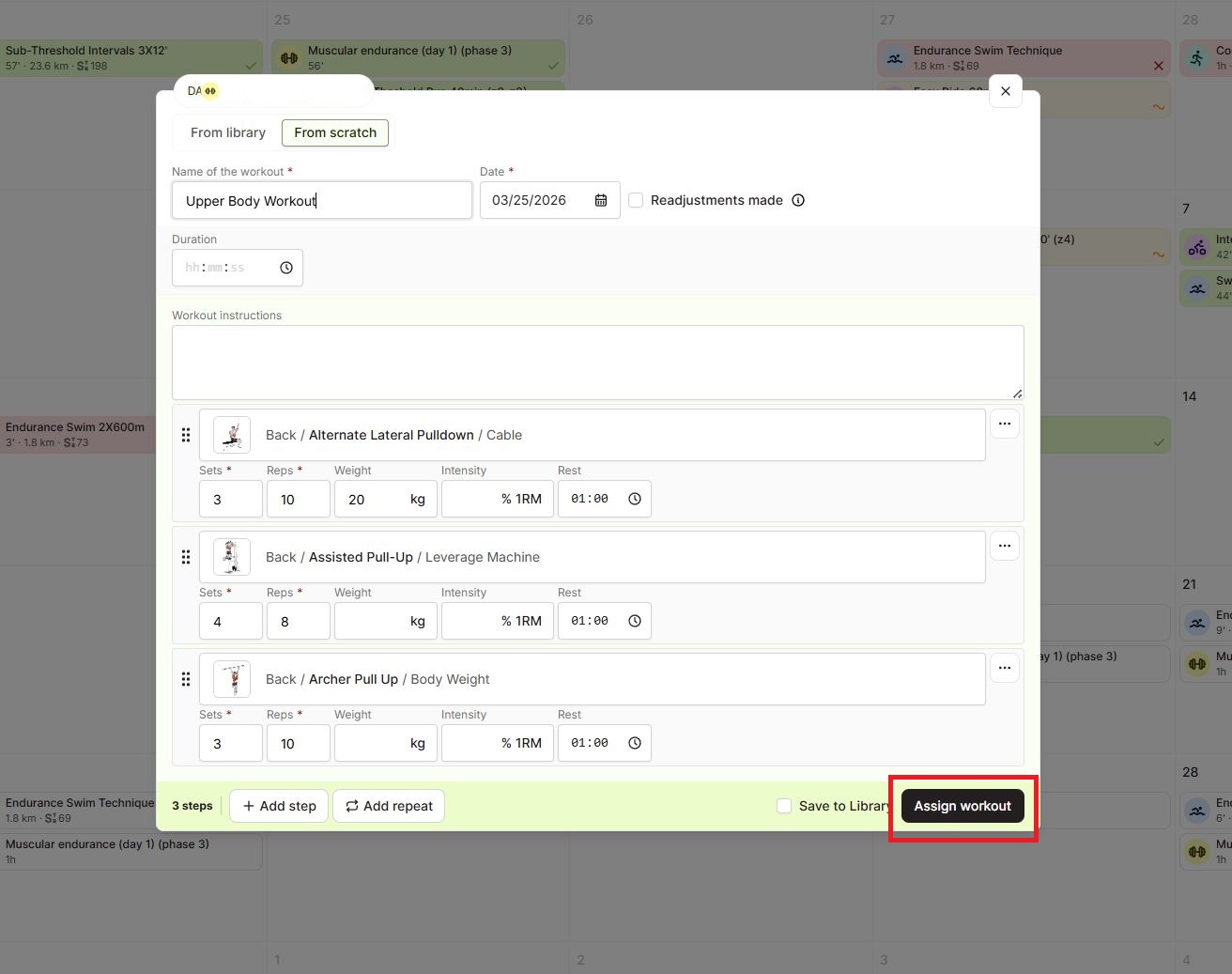
The Workout Builder panel will open. Select the "From scratch" tab to build a custom session. Fill in the workout name, date, duration, and any workout instructions you want your athlete to see.
To start adding exercises, click the "+ Add step" button at the bottom of the panel.
Step 2: Browse the Exercise Library
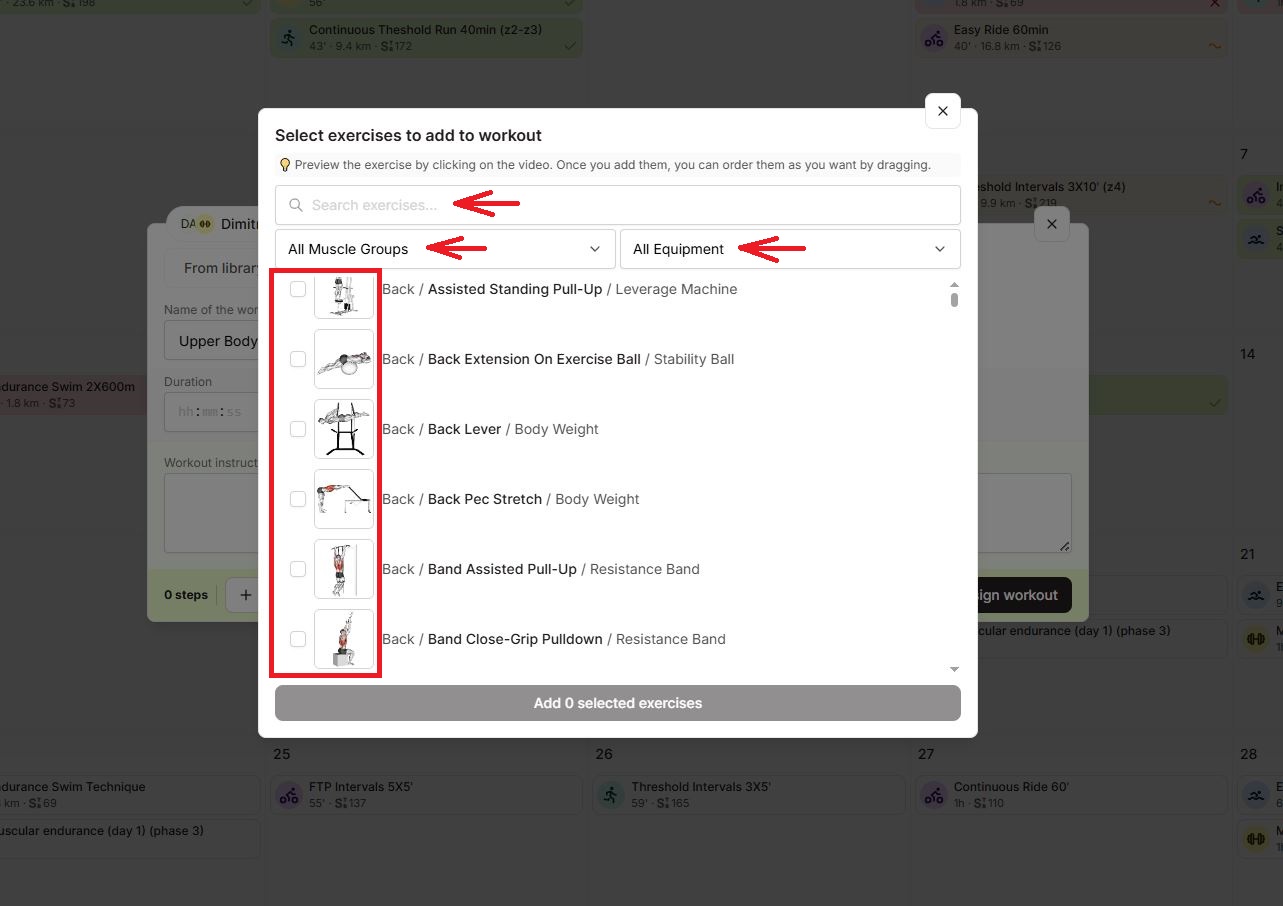
After clicking "+ Add step", the "Select exercises to add to workout" modal will open. This is your Exercise Library.
You have three ways to find exercises:
- Search bar: Type the exercise name directly in the "Search exercises..." field.
- Muscle Group filter: Use the dropdown to narrow results by target area (Back, Core, Upper Legs, Shoulders, Cardio, etc.).
- Equipment filter: Use the dropdown to filter by equipment type (Body Weight, Barbell, Cable, Dumbbell, Stability Ball, Leverage Machine, etc.).
You can combine both filters for faster results. For example, selecting "Core" and "Cable" will show only cable-based core exercises.
Each exercise in the list shows its muscle group, exercise name, and equipment type, along with a GIF thumbnail on the left.
Step 3: Preview Exercise Details
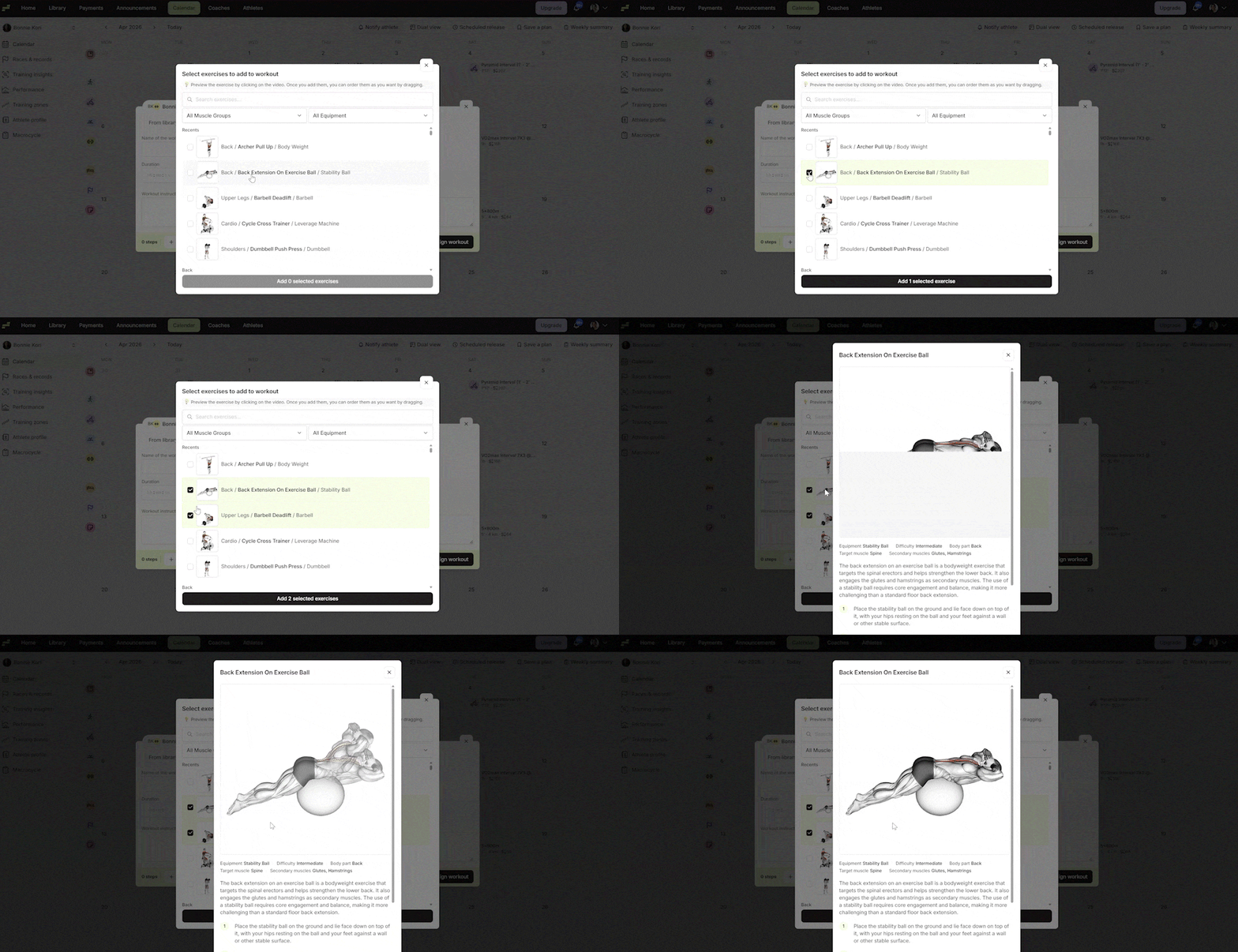
Click on any exercise's GIF thumbnail to open a detailed preview. This view includes:
- A large animated GIF showing the full movement
- Exercise details: equipment, difficulty level, body part, target muscle, and secondary muscles
- A written description of the exercise
- Step-by-step instructions explaining how to perform the movement correctly
This is especially useful when exercise names sound similar or when you want to confirm the exact muscles targeted before adding it to the workout.
Step 4: Select and Add Exercises
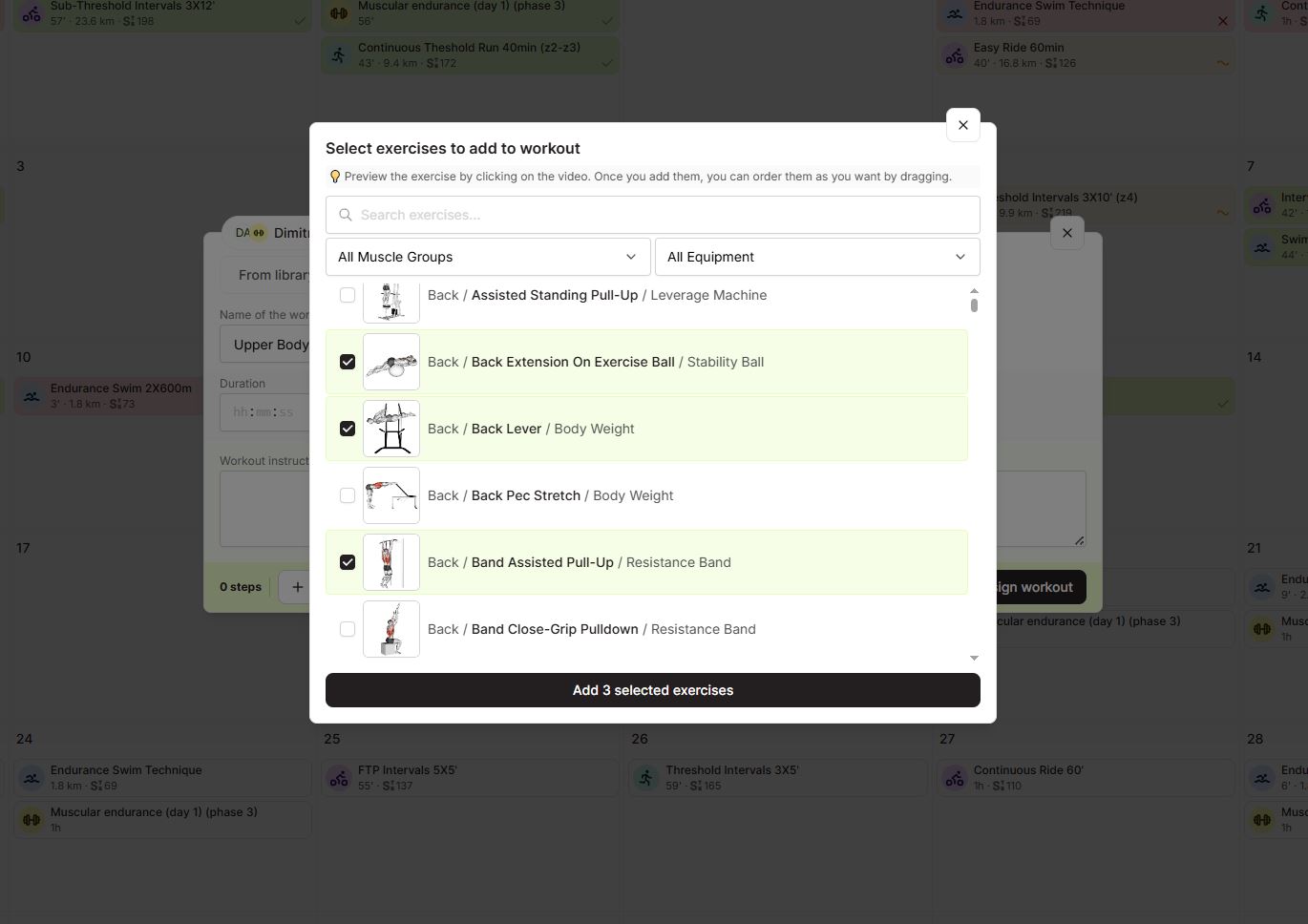
Close the preview and check the box next to each exercise you want to include. You can select multiple exercises at once.
When you're ready, click the "Add selected exercises" button at the bottom of the modal. The button shows exactly how many exercises you've selected (for example, "Add 3 selected exercises").
Step 5: Reorder, Configure, and Assign
Back in the Workout Builder, drag and drop the exercises to arrange them in your preferred order. Set reps, sets, duration, and rest periods for each exercise as needed.
Once you're happy with the session, click "Assign workout" to schedule it on your athlete's calendar.
Save Your Workout to the Library
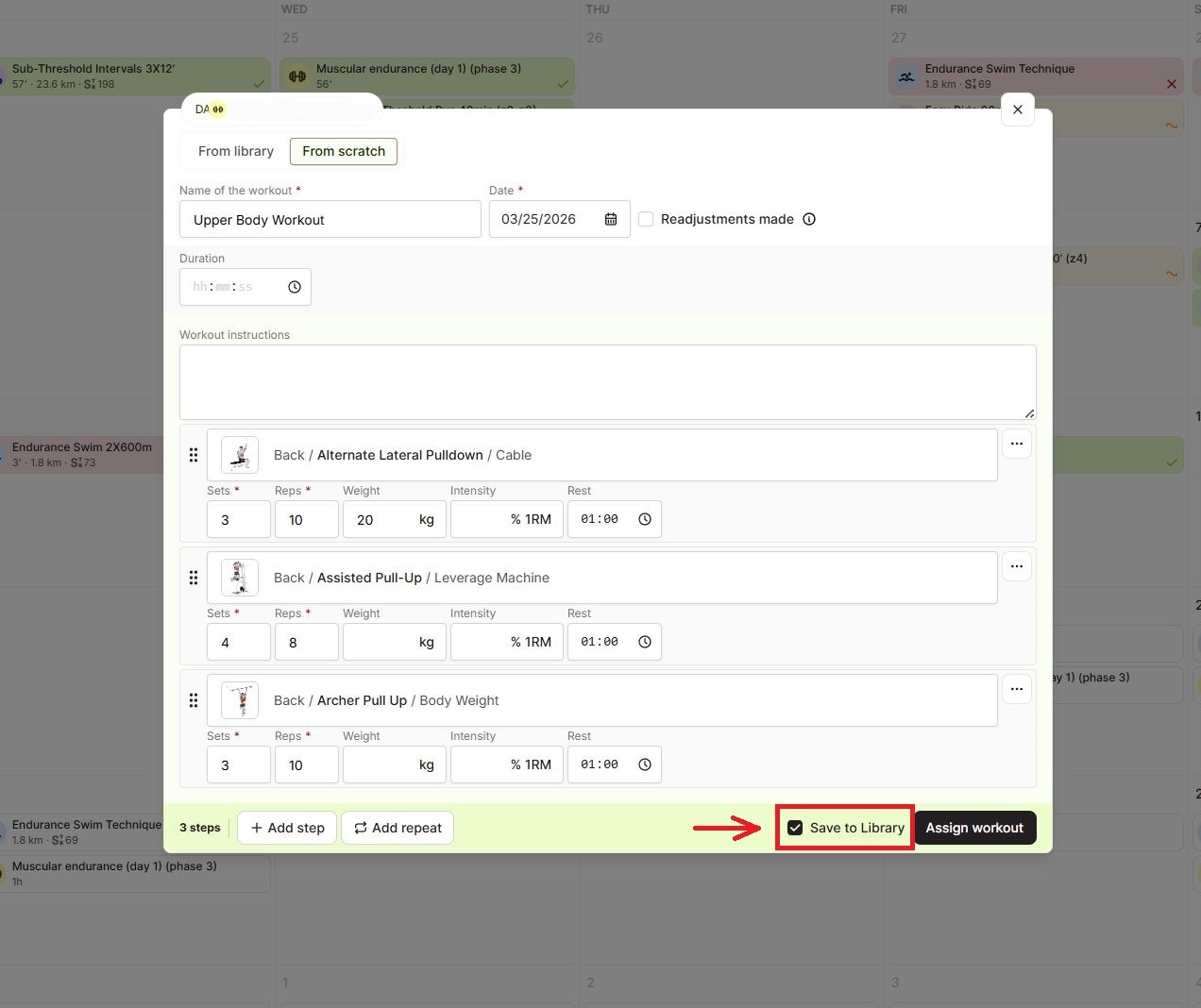
If you want to reuse this workout later, check the "Save to Library" box before assigning. This saves the full session to your workout library so you can assign it to any athlete at any time without rebuilding it from scratch.
What Your Athletes See
Once you assign the strength workout, your athletes will see the full session with animated GIFs for every exercise. They can click on any exercise to view the detailed instructions, target muscles, and step-by-step guide, just like the preview you saw when building the workout.
The GIFs play in-app on both desktop and mobile, so athletes can check proper form before or during the session. There's no extra setup on the athlete's side.
Tips for Coaches
- Combine filters for speed. Using muscle group and equipment filters together is the fastest way to find the right exercise in the library.
- Always preview first. Clicking the GIF opens the full detail view with target muscles, difficulty, and step-by-step instructions. It takes a second and ensures you're assigning the right movement.
- Save sessions you'll reuse. If you program similar strength blocks across athletes or training phases, save the workout to your library once and assign it whenever you need it.
- Works on both desktop and mobile. Your athletes can follow their strength workouts with GIF guidance from any device.